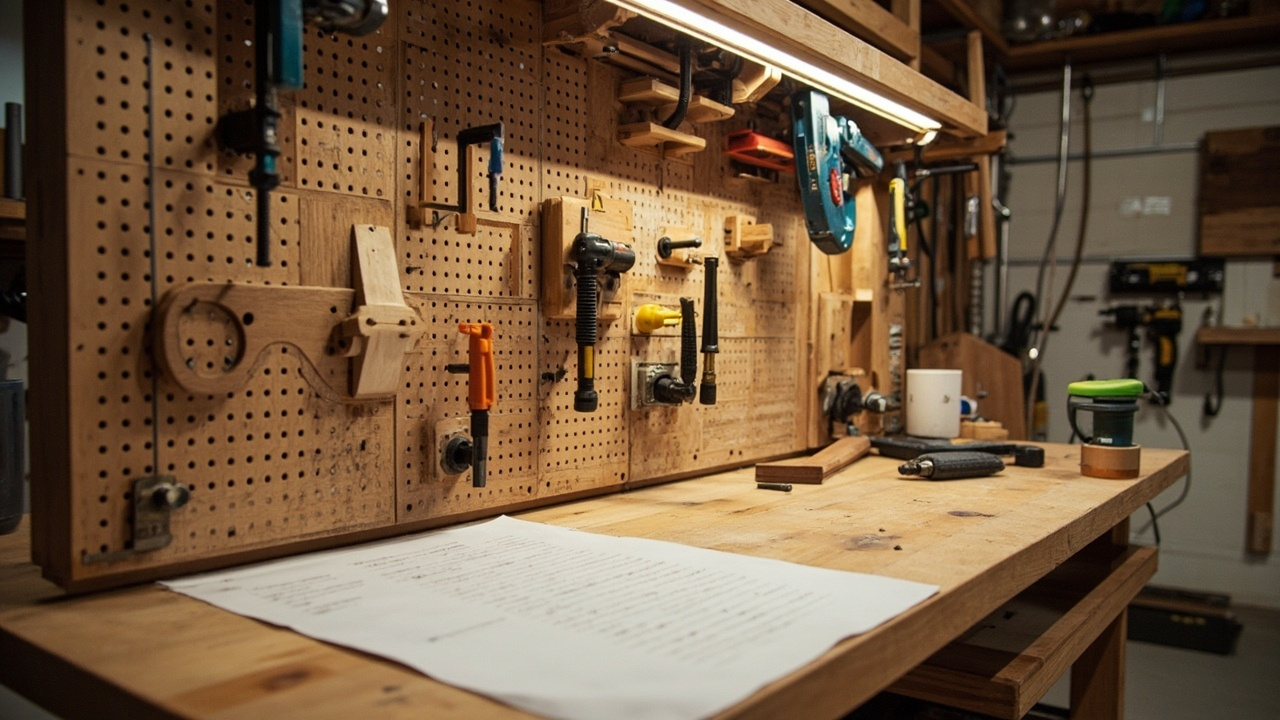
Small-garage woodworkers need plans that balance footprint and function. A visually impressive bench is useless if you cannot move around it, clamp to it, or store the tools you use every week.
1. Start with the footprint
Measure the bench area with the drawer, door, and car-clearance reality in mind. Many readers should build smaller first and only scale up after they know how the garage flows.
2. Stability matters more than fancy joinery
A compact bench still needs weight and stiffness. Look for plans that explain leg thickness, top thickness, lower bracing, and fastener strategy. A shaky bench wastes effort every time you plane, chisel, or sand.
3. Add storage that earns its space
Shelves, lower stretchers, clamp storage, and drawers can be worth it, but only if the plan keeps knee space and clamp access usable. The best small-garage plans do not turn every cavity into awkward storage.
4. Tool support should be realistic
If your bench will support a miter saw station, drilling, assembly, or sharpening, the plan should show how. Look for a build that matches the work you actually do, not a fantasy bench built for social media photos.
5. Why a broad plan bundle can help here
Workbench projects are rarely the only thing you need. People who build a workbench often need matching storage, shelving, lumber carts, and shop cabinets next. A bigger plan library can make that sequence easier.
Bottom line
The best small garage workbench plan is one that fits your floor, supports your actual tasks, and still leaves room to move. If you want one source with multiple workbench and storage ideas, a large woodworking-plan library is worth checking.