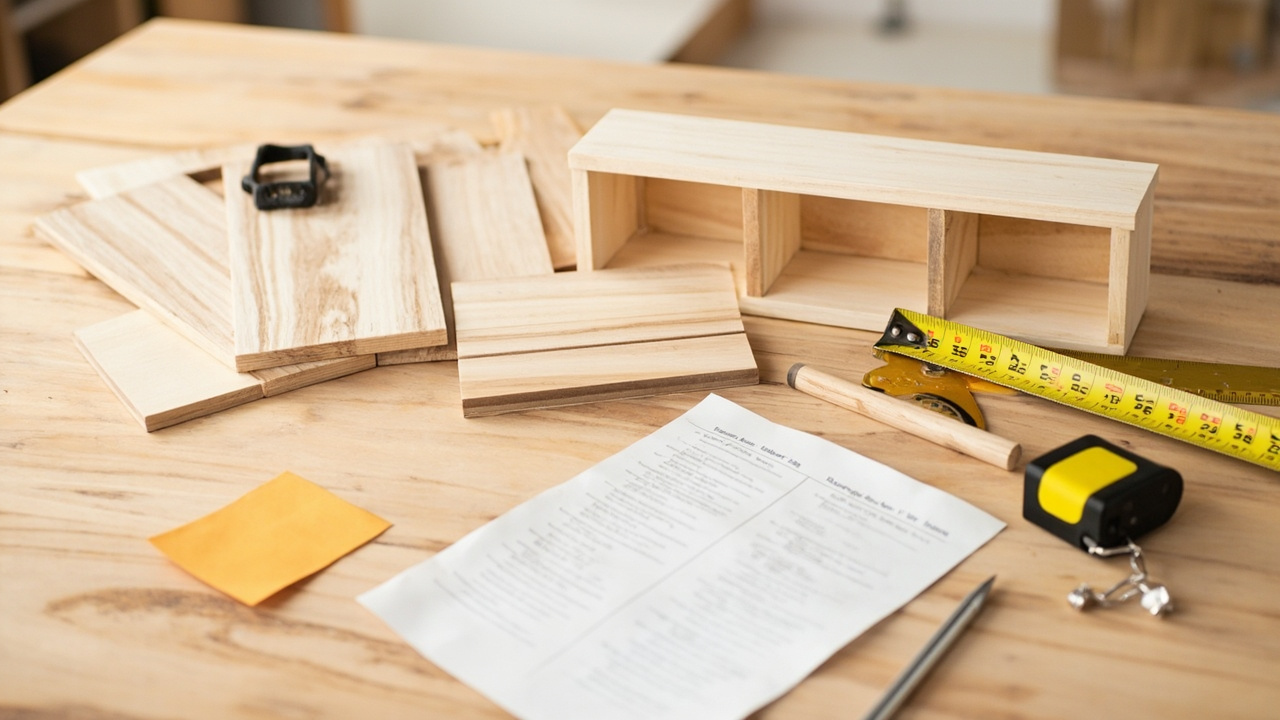
The simplest way to spot a useful woodworking plan is to ask one question: can I shop, cut, and assemble this project without guessing? If the answer is no, the plan is not finished enough for a beginner.
1. A real materials list
A beginner plan should tell you what lumber to buy, how thick it should be, what hardware is required, and what optional materials can be swapped. Without that, a cheap plan becomes an expensive trip back to the store.
- Board dimensions and thickness
- Hardware requirements
- Recommended sheet goods if used
- Allowance for waste or offcuts
2. Exact measurements and cut diagrams
Many disappointing plans show the finished project but never really explain how to cut the parts. Good beginner plans give each piece a dimension, not just a vague drawing. Cut diagrams are especially helpful because they reduce mistakes and material waste.
3. Build order that matches reality
Some plans skip the hard part. They jump from loose parts to a finished assembly without covering squaring, clamping, alignment, or drill order. Plans that work well for beginners show a realistic sequence.
4. Tool expectations that are honest
Not every reader has a professional workshop. Good beginner plans clearly separate required tools from nice-to-have upgrades. That matters for garage builders and hobby woodworkers.
5. Why a large plan library can help beginners
A plan library can be more practical than buying random single-project PDFs because it gives you a wider range of difficulty levels. You can start with simple storage builds and move toward benches, furniture, or outdoor projects without changing sources every time.
Bottom line
If you are shopping for woodworking plans as a beginner, look for completeness, not just variety. A large catalog is helpful, but only if the plans tell you what to buy, what to cut, and how to build without guesswork.